Father of Cyber Criminology & Victimology · Proponent of Space Transition Theory ORCID 0000-0002-6380-727XGoogle ScholarEmail
K. JaishankarProfessor of Criminology & Justice Sciences
Mentors

My mentors

Six scholars guided me at decisive moments, from my first class in criminology to the founding of new disciplines and institutions. Here I tell how each of them shaped my journey.

Professor K. Chockalingam

Professor K. Chockalingam

Research Supervisor and Mentor

Former Vice Chancellor, Manonmaniam Sundaranar University, Tirunelveli, India
Professor Emeritus of Criminology and Victimology, School of Law, RV University, Bengaluru, India

Professor K. Chockalingam has been my teacher from my very first class in the MA Criminology programme at the University of Madras in 1994. From 1997 he was my PhD supervisor, and he guided my doctoral research with patience, rigour and generosity.

In 2002, as Vice Chancellor of Manonmaniam Sundaranar University, he offered me a post as a temporary lecturer. That opening led to my permanent appointment in 2003 in the university’s Department of Criminology and Criminal Justice, where I served for about fourteen years and built much of my academic career.

His pioneering work in victimology shaped my own thinking, and it was on that foundation that I later developed cyber victimology. His example as a builder of institutions inspired me to found the South Asian Society of Criminology and Victimology and the International Institute of Justice and Police Sciences.

He remains my teacher, my guide and the first of my mentors.

Professor Keith D. Harries

Professor Keith D. Harries

Mentor and External Dissertation Reader

Emeritus Professor of Geography, University of Maryland, Baltimore County, United States

My association with Professor Keith D. Harries began in 1998, when he visited Pondicherry and Professor A. Sivamurthy asked me to be his guide during the visit. He was then one of the leading scholars of crime mapping in the world.

He influenced me to change the area of my doctoral research to crime mapping and Geographic Information Systems. To prepare for that work I completed a Postgraduate Diploma in GIS Management at the Department of Geography, University of Madras. My PhD thesis, a GIS analysis of communal violence, had him as its external reader.

In January 2008 he visited India again. We travelled together to Bhopal and Kanyakumari, and he delivered a lecture at Manonmaniam Sundaranar University. That same year he wrote the foreword to my edited book International Perspectives on Crime and Justice.

To honour him, I instituted the Professor Keith Harries New Scholar Award, which IIJPS has presented to outstanding young researchers at every conference it has organised since 2023.

Professor Natti Ronel

Professor Natti Ronel

Mentor, Collaborator and Co-author

Professor, Department of Criminology, Bar-Ilan University, Israel

I first met Professor Natti Ronel in 2004 at the First International Conference of the Indian Society of Victimology, held at the Department of Criminology and Criminal Justice, Manonmaniam Sundaranar University. He was a speaker there and also conducted a workshop on his grace therapy.

In 2007 he organised a victimology conference at Bar-Ilan University in Israel and invited me as a speaker. After the conference he asked me to find a publisher for selected papers. I approached Cambridge Scholars Publishing, and together with Moshe Bensimon we published Trends and Issues in Victimology in 2008. He later contributed his Criminal Spin theory to my edited book International Perspectives on Crime and Justice (2009).

When I founded the South Asian Society of Criminology and Victimology in 2009, I was a young Assistant Professor of 36, and the idea met considerable opposition, since academic societies are usually founded by full professors. Professor Ronel was one of the key international scholars who supported it from the start. He joined the Advisory Board and remains on it today. He served as Programme Chair of the first SASCV conference in Jaipur in 2011 and brought a group of Israeli criminologists with him, which enriched the conference greatly. He continued as Programme Chair for every SASCV conference from Kanyakumari in 2013 to Goa in 2016, and he co-edited all four SASCV conference proceedings with me.

From the papers of the Jaipur conference we co-edited Global Criminology: Crime and Victimization in a Globalized Era (CRC Press, 2013). In it he set out how his Criminal Spin theory leads towards Positive Criminology. Our perspectives have often differed, and we have never been afraid to debate them in the open. When I introduced therapeutic criminology in 2023, he questioned whether it was distinct from clinical and rehabilitative criminology. I argued that criminology is a fluid discipline that must respond to new needs, as it did when I founded cyber criminology in 2007. Just as he developed positive criminology and positive victimology, I developed therapeutic criminology, because opening a new path is the right of every scholar. We did not fully agree, and that is as it should be between scholars who respect each other. Those honest exchanges have made our work together stronger.

We met again in September 2024, when at my invitation he came to Saveetha School of Law in Chennai for the International Seminar on Neo-Victimologies and Modern Jurisprudence, organised with IIJPS and SASCV. He spoke on spiritual victimology and grace theory, and I presented my new concept of political victimology. Our conversation continues, as each of us keeps opening new paths in criminology and victimology.

Professor Ronel stood with SASCV when it most needed friends, and his support helped it grow into the society it is today.
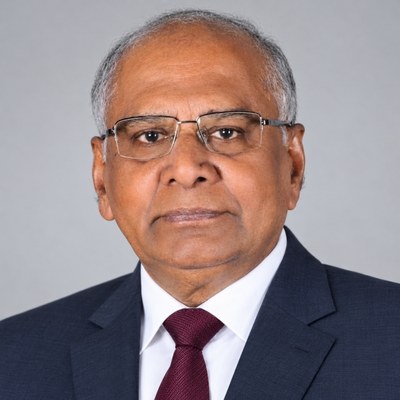
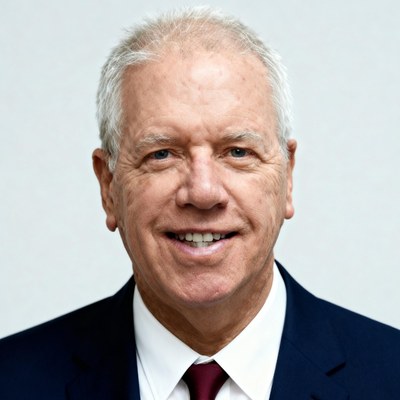
Professor David S. Wall

Professor David S. Wall

Mentor and Host, Commonwealth Academic Fellowship, University of Leeds (2009 to 2010)

Professor of Criminology, Centre for Criminal Justice Studies, School of Law, University of Leeds, United Kingdom

My association with Professor David S. Wall began in 2006, when I was planning to launch the International Journal of Cyber Criminology and invited him to join its Editorial Advisory Board. We first met in person at a conference in Bangalore in early 2009. In November that year I joined the University of Leeds as a Commonwealth Academic Fellow, and he hosted me at the School of Law for six months. He then held the Chair of Criminal Justice and Information Society at Leeds. His book Cybercrime: The Transformation of Crime in the Information Age (Polity, 2007) had already made him one of the leading scholars of the subject.

Under his supervision I completed my fellowship project, “Victims of Cyber Crimes: A Study on Developing Profile, Reviews and Policy Guidelines”. The project turned my attention to the victims of cyber crime, a line of work that later grew into cyber victimology. We also had many long discussions about cyber crime, and especially about the different ways it was affecting the people of the Indian subcontinent. He later wrote that these conversations helped him understand how ubiquitous the Internet had become across the world.

At Leeds I compiled my edited book Cyber Criminology: Exploring Internet Crimes and Criminal Behavior (CRC Press, 2011), with chapters by scholars from many countries. Professor Wall wrote its foreword, in which he recalled our time together in Leeds and the work that went into the collection.

His generosity as a host and supervisor gave me the time and the setting to complete both the project and a book that helped establish cyber criminology as a discipline.

Professor Marc Groenhuijsen

Professor Marc Groenhuijsen

Mentor and Collaborator

Emeritus Professor of Criminal Law, Criminal Procedure and Victimology, Tilburg University, The Netherlands
Former President, World Society of Victimology

I first met Professor Marc Groenhuijsen in 2000, when I was a PhD student and he visited the Department of Criminology at the University of Madras in Chennai. Our meetings in those days were short, but they were always rich in ideas. He went on to accompany me on a long journey, from my years as a PhD student to my becoming a Full Professor, and he remains a friend, philosopher and guide.

In 2011 he attended the First International Conference of the South Asian Society of Criminology and Victimology in Jaipur, which I organised. He was impressed by the way the conference was run, and the following year he invited me to deliver a keynote address at the 14th International Symposium of the World Society of Victimology in The Hague. He invited me again as a keynote speaker at the 15th Symposium in Perth in 2015. It was in Perth that I introduced cyber victimology as a new sub-discipline of victimology.

Our paths crossed at many other victimology events, including the Stockholm Criminology Symposium in 2012 and the SASCV conference in Kanyakumari in 2013, and we kept up our conversations online in between. In December 2016, soon after I became Professor and Head of Criminology at Raksha Shakti University, we met at the 18th International Congress on Criminology at Jindal Global University, and he rejoiced in my promotion.

When the editors of his Festschrift invited me to contribute, I wrote my chapter on cyber victimology, the field he had given me the platform to introduce. Professor Groenhuijsen is one of the pillars of my academic life, and with profound gratitude I say that he has made an indelible mark on it.

Professor Michael Pittaro

Professor Michael Pittaro

Mentor and Collaborator

Former Director of Corrections, Northampton County, Pennsylvania, United States
Honorary Professor of Criminal Justice, IIJPS

My association with Professor Michael Pittaro grew out of our shared interest in cyber crime at a time when few criminologists took it seriously. In February 2007 he invited me to Lehigh Valley College in Pennsylvania, where I delivered a lecture on my Space Transition Theory of Cyber Crimes. On that visit he presented me with a plaque as an Outstanding Criminal Justice Educator.

The following year he co-edited, with Professor Frank Schmalleger, Crimes of the Internet (Prentice Hall, 2008). It was one of the first major anthologies on cyber crime, and it brought together scholars from the United States, India, Europe and Israel. In this volume I first published my Space Transition Theory. The book sold worldwide and carried the theory to readers on every continent.

Crimes of the Internet also led Professor Pittaro to develop a course on cyber crime for Savant Learning in Nashville, Tennessee, which he has taught nearly every term since 2010. Generations of his students have met my work in that classroom.

When he came to India in July 2017, he visited me at Raksha Shakti University in Gandhinagar, where I was then Professor and Head of the Department of Criminology. He contributed a chapter on cyber stalking to my edited book Cyber Criminology: Exploring Internet Crimes and Criminal Behavior (CRC Press, 2011), and in 2024 he served as Programme Chair of the First International Conference on Criminology and Criminal Justice in Sri Lanka. He is now an Honorary Professor of Criminal Justice at IIJPS.

He believes that crimes which cross borders demand scholars who cross borders too. Our friendship has been built on exactly that belief.